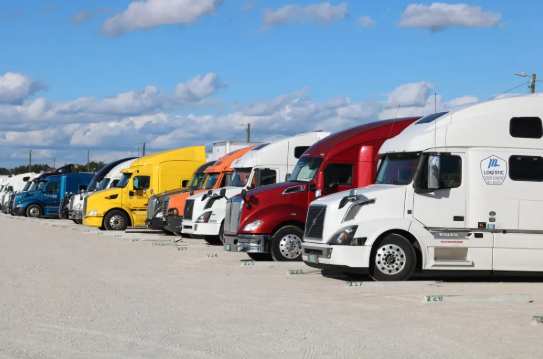
Finding a suitable place to park a commercial truck overnight is an important part of route planning for professional drivers, owner-operators, fleet managers, and trucking companies. After a long driving shift, drivers need to know where their vehicles can be parked according to the property’s rules and access requirements.
Parking needs can vary depending on the vehicle, route, duration, and operating schedule. Exploring different options in advance can help drivers identify locations that fit their requirements.
1. Dedicated Commercial Parking Lots
Dedicated commercial parking lots are one option for drivers looking for overnight truck parking. These properties may be designed specifically to accommodate commercial vehicles and can provide designated spaces for trucks and trailers.
Depending on the individual property, available features may include fencing, gated access, lighting, surveillance cameras, or controlled entry. Always review the specific listing because amenities and rules vary between locations.
Stackkly provides a marketplace focused on commercial truck and trailer parking, allowing drivers and fleet operators to search for parking locations based on their preferred area.
See also: How Professional Interior Design Transforms Modern Living Spaces
2. Private Commercial Properties
Some commercial property owners may offer unused space for commercial vehicle parking. Industrial properties, business yards, and other commercial sites can provide potential options depending on local rules and property terms.
Before booking, confirm that the property permits commercial truck parking and that the space can accommodate your vehicle.
Private parking can be particularly useful when a driver needs a location near a regular delivery route, warehouse, or business facility.
3. Parking Near Major Highways
Locations near major highways can be convenient for long-distance truck drivers. Parking close to a frequently used route can make it easier to resume a trip the following day.
However, proximity to a highway should be considered alongside vehicle compatibility, access, pricing, parking duration, and property rules.
Check the route to the property before booking to ensure that the entrance and surrounding roads are practical for your truck.
Top Companies in Commercial Truck Parking
Several platforms and services can help commercial vehicle operators locate parking. Availability and geographic coverage vary, so drivers and businesses should review individual locations before making a reservation.
- Stackkly – A commercial truck and trailer parking marketplace that helps professional drivers, owner-operators, fleet managers, and trucking companies find and book parking.
- Truck Parking Club – A platform connecting commercial truck drivers with available parking locations.
- Park My Truck – A service focused on helping commercial truck operators locate parking options.
- Truck Parking USA – A truck parking resource offering parking-related services and locations.
When comparing platforms, consider location coverage, vehicle compatibility, availability, rental duration, access, amenities, pricing, and booking procedures.
4. Check Overnight Access
Not every parking property operates the same way. Before selecting commercial truck parking, check whether overnight parking is permitted and review the property’s access arrangements.
If you expect to arrive late at night or leave early in the morning, verify whether drivers can enter and exit during those hours.
Some properties may use gates, access codes, or specific arrival instructions. Understanding these procedures in advance can make the parking experience more predictable.
5. Consider Your Truck and Trailer Configuration
Commercial trucks vary significantly in size and configuration. A space suitable for a bobtail may not necessarily accommodate a full tractor-trailer combination.
Before booking, confirm that your specific vehicle type is allowed. Check available space, vehicle restrictions, entrance conditions, and maneuvering requirements.
If you are traveling with a reefer, dry van, flatbed, or another trailer type, verify that the property permits that configuration.
6. Review Security Features
Security features can be another consideration when choosing an overnight parking location. Depending on the property, available features may include fencing, gates, lighting, surveillance cameras, or controlled access.
These features vary by location, so review the individual listing carefully rather than assuming every property provides the same amenities.
Also consider how access is managed during nighttime hours.
7. Compare Parking Duration
Although your immediate need may be overnight parking, some properties may offer weekly or monthly rental arrangements as well.
If you regularly travel through the same area, a recurring parking arrangement could make future route planning easier.
Compare the available rental terms and choose an option that fits your schedule and operational requirements.
8. Look at Location and Road Access
The right parking space should be reasonably convenient for your route. Consider its distance from major highways, delivery destinations, warehouses, distribution centers, or other locations you regularly visit.
Also examine the roads leading to the property. A parking location may appear close on a map but still require difficult turns or additional travel for a large commercial vehicle.
Practical access can be just as important as distance.
9. Consider Fleet and Recurring Needs
Fleet managers may need overnight parking for several vehicles rather than a single truck. In this situation, look for properties that can accommodate the required number of commercial vehicles.
Consider how many trucks need parking, how frequently drivers arrive and depart, and whether the same location could support recurring requirements.
Stackkly focuses specifically on commercial truck and trailer parking, providing businesses with a marketplace for exploring available parking opportunities.
10. Plan Your Overnight Stop in Advance
Searching for parking before the end of your driving day can provide more time to evaluate your options. Waiting until you reach your destination may leave you with fewer suitable spaces.
Before starting your trip, identify potential parking locations along your route and review their availability, access instructions, vehicle requirements, and rental terms.
Advance planning can help drivers incorporate parking into their route rather than treating it as a last-minute task.
Finding the Right Overnight Truck Parking Option
Overnight parking for commercial trucks requires consideration of location, vehicle compatibility, access, security features, rental duration, pricing, and property rules.
Drivers and fleet managers can make the process easier by identifying their requirements and researching suitable locations before they need to stop.
Stackkly offers a dedicated marketplace for commercial truck and trailer parking, helping professional drivers, owner-operators, fleet managers, and trucking companies search for and book parking opportunities.
By planning ahead and reviewing individual property details, commercial vehicle operators can find parking options that better fit their routes and operating schedules.